
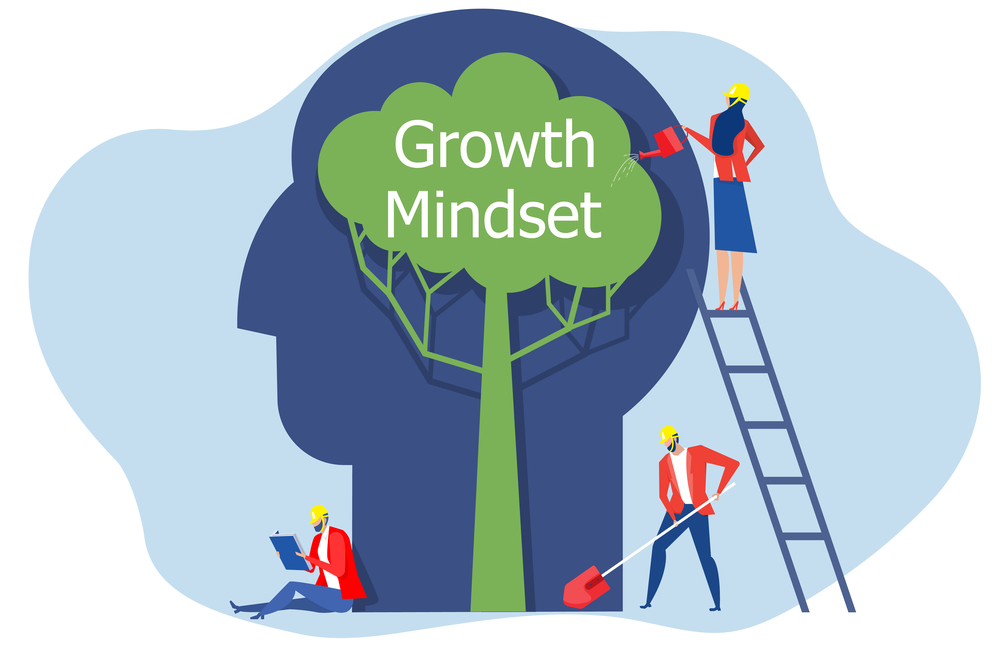
Look, we’ve all been there. You’re staring at a blank screen, a complex project at work, or a messy life situation, totally frozen. That quiet, annoying little voice in the back of your brain immediately starts whispering: “You’re out of your depth. You’re just not smart enough, creative enough, or talented enough to pull this off.”That’s exactly where developing a growth mindset can make a difference. Instead of seeing challenges as proof that you’re not good enough, you start viewing them as opportunities to learn, improve, and figure things out along the way.
It feels brutal, but let’s be honest—it’s completely normal.
For decades, most of us were practically brainwashed to believe that talent is something you’re either born with or you’re not. We look at genius entrepreneurs, world-class athletes, or incredibly skilled artists and think, “Must be nice. They got lucky in the genetic lottery.”
That way of thinking is a total trap.
Years ago, psychologist Carol Dweck wrote a book called Mindset: The New Psychology of Success, and her research blew a massive hole in that whole theory. She proved that your brain isn’t hardwired like a piece of static hardware. People who believe they can get better through practice, good strategies, and a little help end up blowing past those who rely purely on “natural talent.”
She split this into two mindsets:
- The Fixed Mindset:“If I’m not naturally awesome at this right away, why bother? Screwing up means I’m a failure.”
- The Growth Mindset:“I have no idea what I’m doing right now, but I can figure it out if I keep trying. Mistakes are just data.”
Flipping that switch in your head isn’t about waking up tomorrow, staring in the mirror, and reciting fake toxic-positivity affirmations. It’s about building raw, simple daily habits that slowly re-wire how you handle stress, screw-ups, and self-doubt.
If you’re ready to stop getting in your own way, here are 10 dead-simple habits that will actually change how you think and live.
1. Add the Magic Word: “YET”

Imagine you’re trying to learn a complicated software or write a massive report. You hit a brick wall, throw your hands up, and sigh, “I just can’t do this.”
Now, rewrite that exact sentence in your head: “I can’t do this… yet.”
It sounds like a cheesy grammar trick, but the mental shift is massive. When you say “I can’t do this,” your brain slams the iron gate shut. It decides the case is closed and stops wasting energy trying to figure out a solution.
When you tack on “yet,” you leave that gate wide open. You’re telling your brain that you aren’t stupid; you’re just at the beginning of the learning curve. You haven’t cracked the code today, but give it time, effort, and a few coffee refills, and you will.
Try this right now:
Catch your internal monologue today. The second you catch yourself thinking “I suck at managing money” or “I can’t do public speaking,” interrupt yourself out loud or in your head and forcefully stick “yet” on the end.
2. Treat Problems Like Video Games, Not Brick Walls
When a nightmare task drops into your lap, what’s your gut reaction? Do you get a pit in your stomach and start looking for a way to dodge it?
People stuck in a fixed mindset run away from hard tasks because they view messing up as a personal insult to their intelligence. But if you actually want to grow, you have to flip the script: the messiest problems are usually where the best stuff happens.
Think about playing a video game or working on a tough puzzle. When you hit a hard level, you don’t throw the controller at the TV and quit forever—you try a different route, tweak your buttons, and figure out the boss fight mechanics.
Getting stuck on a project or taking a wrong exit on a road trip doesn’t mean you’re broken. It just means you’re right in the middle of figuring things out.
Try this right now:
The next time a chaotic problem hits your desk, take a breath and ask yourself: “If this were a video game, what weird strategy haven’t I tried yet?” Move from feeling attacked to just being curious.
3. Turn Your Screw-Ups into Free Lessons

Let’s not sugarcoat it: failing hurts. It stings your pride, makes you look awkward, and ruins your afternoon. But progress will always beat sitting around waiting to be perfect.
Take Alexander Fleming. He didn’t invent penicillin through some hyper-strict, flawless science experiment. He literally left a mess of Petri dishes sitting out on his bench, went on vacation, came back, and saw mold killing off his bacteria samples. His accidental laziness completely revolutionized modern medicine.
When you mess up, don’t take it as proof that you’re a hopeless cause. Feel the disappointment for a minute, take a breath, and ask two calm questions:
- Where exactly did this train go off the tracks?
- What can I tweak so I don’t make this exact same mistake next week?
Mistakes aren’t personal flaws. They are just free data points.
4. Fall in Love with the Boring Process, Not Just the Trophy
We live in a world that only cares about the final product. We applaud the shiny promotion, the huge check, the 6-pack abs, or the spotless house. But when you’re obsessed solely with the finish line, you create a toxic trap where you feel completely useless until you hit the goal.
People who achieve crazy, long-term success aren’t obsessed with the trophy—they fall in love with the daily grind. They like the quiet practice, the terrible first drafts, and the unglamorous reps that nobody ever sees or likes on Instagram.
When you start taking pride in showing up rather than just winning, you become completely unstoppable.
Change the internal tape:
- Fixed:“If this presentation isn’t 100% flawless, the whole week was a waste.”
- Growth:“I prepped hard, pushed through my nerves, and tried a new style. That’s a huge win no matter what people think.”
Praise yourself for putting in the reps. The results always take care of themselves eventually.
5. Hunt Down Brutally Honest Feedback

For most of us, getting criticized feels like getting slapped in the face. When a boss, client, or partner points out a flaw in our work, our defense shields pop right up. We make excuses, blame traffic, point fingers, or completely shut down.
If you want to level up, you have to stop treating feedback like an attack on your character. Other people see your blind spots effortlessly because they aren’t standing inside your head. Good feedback isn’t someone telling you you’re bad; it’s someone handing you a shortcut to get better faster.
How to take feedback without losing your cool:
- Keep your mouth shut and just listen—don’t jump in to defend yourself.
- Give yourself five seconds to swallow your pride.
- Ask a smart question: “I hear you. What’s one specific thing I should change next time to make this better?”
The moment you treat critique as free coaching instead of an insult, your growth will explode.
6. Force Yourself to Feel Awkward and Uncomfortable
If you stay tucked away in your comfortable little bubble, you’ll feel safe—but you’ll also rot in place. True growth only happens when you force yourself into situations where you feel slightly out of your depth.
Traveling somewhere where you can’t read the signs, picking up a tool at work you have zero experience with, or speaking up in a crowded room—these things make your heart race. But that nervous energy is literally the sound of your brain building new neural connections.
You don’t need to quit your job or jump out of an airplane. Just force yourself to do one tiny, uncomfortable thing a week.
Easy ways to get uncomfortable:
- Take a completely different street home today.
- Say hi to someone in an elevator or coffee shop line.
- Attempt a phrase in a language you’re terrible at.
- Volunteer for that weird work assignment everyone else is avoiding.
Get used to that awkward feeling—it’s just the feeling of getting better.
7. Stop Being Jealous and Start Copying Winners
Ever felt that sharp, ugly spike of jealousy when a coworker got the raise you wanted or a friend bought a gorgeous house? It’s a very human reaction, but it comes from a scarcity mindset—the belief that there’s only one small pie of success, and if someone else gets a slice, you’re going to starve.
A growth mindset knows there are endless pies.
When someone near you wins big, don’t roll your eyes or back away. Get ridiculously curious. Treat their success like a free masterclass and look at what they actually did to get there.
Ask them directly:
- “You crushed that project! How did you map it out when you started?”
- “What habits helped you stay on track when things got crazy?”
Turn your envy into research. Other people’s wins are just proof that whatever you want to do is actually possible.
8. Write Your Goals Down (Stop Keeping Them in Your Head)

Vague daytime wishes lead to zero real results. Saying “I want to be healthier” or “I should really save money” gives your brain absolutely nothing to work with.
Growth-oriented people write their goals down on real paper, chop them up into tiny pieces, and track them ruthlessly. The physical act of writing stuff down forces your brain to take the goal seriously instead of letting it float around as a temporary thought.
How to actually set goals that stick:
- Be painfully specific: Write down the exact target.
- Break it into micro-steps: Slice a yearly goal into monthly targets, weekly tasks, and a single thing you can do today.
- Put it where you can’t ignore it: Tape it to your bathroom mirror, put it on your fridge, or stick it on your computer screen.
If it stays inside your head, it’s just a wish. Put it on paper so it becomes an assignment.
9. Do a 5-Minute Brain Dump Every Night
You don’t grow automatically just because another day passed on the calendar. You grow when you pause, look back at the chaos, and actually digest what happened.
At the end of a crazy day, it’s easy to collapse onto the couch, scroll mindlessly on your phone for three hours, and go to bed wired. But taking just five minutes before you sleep to review your day turns random noise into real wisdom.
Ask yourself these 3 questions in a notebook before bed:
- What was one tiny win today? (Even just handling a nasty email with grace.)
- Where did I get stuck or frustrated?
- What can I do 1% better tomorrow because of it?
This simple habit stops your days from blending together into a blur and keeps you moving forward.
10. Fix the Way You Talk to Yourself
The most important conversation you’ll ever have in your life is the ongoing chatter happening inside your own skull.
We all have a loud inner critic. When you mess up, that voice loves to kick you while you’re down, calling you lazy, stupid, or useless. If you let that negative noise run on loop, it will drag you right back into a fixed mindset.
You have to catch that voice in the act and talk back to it like a real person.
Treat yourself with the same basic patience and respect you’d offer a good friend who came to you asking for help. You’d never tell them to give up and die—so stop saying it to yourself.
The Long Game

Developing a growth mindset isn’t something you finish over the weekend. It’s a lifelong habit. You’re going to have bad days where you slip into old patterns, lose your cool, and feel like a total failure. That’s just part of being human.
Don’t beat yourself up when that happens—that’s just the fixed mindset trying to sneak back in!
Pick just one habit from this list today. Maybe start adding the word “yet” to your negative thoughts, or take five minutes to write down three wins before bed tonight.
You don’t have to overhaul your whole life by tomorrow morning. Just focus on being 1% better, wiser, and tougher today than you were yesterday. Keep moving!
FAQ’S
Q: How do I know if I actually have a fixed mindset in real life?
Pay attention to how you react when stuff gets hard—if your knee-jerk move is making excuses or backing off to protect your ego, that’s it.
Q: Can I have a growth mindset at work but still have a fixed mindset at home?
100% yes—it’s totally normal to feel super confident trying new things in one area of life while feeling completely stuck and stubborn in another.
Q: What if I try adopting a growth mindset and still end up failing anyway?
That’s literally part of the deal; the point isn’t guaranteed instant success, but building the stamina to dust yourself off and try a better angle.
Q: How can I help my kids or partner build a growth mindset without sounding bossy?
Stop praising them just for being “smart” or “talented”—instead, call out their effort, their grit, and the clever strategies they used to work through a problem.
Q: How long does it usually take to rewire my brain and actually feel a difference?
You’ll notice a mental shift in just a few days of catching negative thoughts, but turning it into second nature usually takes a few weeks of consistent practice.